With FP&A software, finance and operational managers can drive improved performance by monitoring financial results against forecasts and goals and using analytics to recognize key trends and predict outcomes. Traditionally, finance teams primarily used How to Start a Bookkeeping Business Microsoft Excel to compile data, analyze key performance indicators (KPIs), and create budgets and forecasts. However, while Excel is still widely used in FP&A, it has some limitations, especially as companies grow in size and complexity.

Investment evaluation models
- The goal is to build a plan that motivates performance, aligns resources with strategy, and remains flexible enough to adapt when conditions change.
- Traditionally, FP&A teams worked in Excel sheets, and while they are effective for computing data, they don’t support seamless collaboration between teams.
- Access to real-time data insights and reporting helps you stay relevant despite changing markets and economic uncertainty.
- An FP&A analyst helps management understand the company’s finances and plan for the future.
- Very few, if any, companies can be consistently profitable and grow without careful financial planning and cash flow management.
- Yes, an FP&A certification can be worth it for professionals who want to strengthen their analytical and strategic skills, build credibility, or transition into FP&A roles.
Most FP&A roles require a bachelor’s degree in finance, accounting, or a related field. Some employers may also require a master’s degree or professional certification, such as the CFA (Chartered Financial Analyst) designation. Having clear goals and objectives will help you focus your efforts and ensure that the FP&A function is aligned with the organization’s broader goals. You don’t need to be a pro at every new software and tool to hit the market. However, being a tech-savvy FP&A professional gives you a competitive edge because you’ll often have to learn new tools quickly and even online bookkeeping teach others on the team how to use different technology. Picture this – you’re the CEO of a business, and you need to make a decision that will impact your bottom line.
- Our free Management Accounting Course Notes provide a comprehensive overview of key concepts and techniques for effectiv…
- Workday Adaptive Planning is best for large companies seeking a solution that is not just focused on finance and FP&A.
- Once the financial data has been transformed and checked for accuracy by an FP&A analyst, teams can now use that data to prepare reporting of visualizations, dashboards, or build driver-based forecasting models.
- The financial planning and analysis software gives them important insights that help them make better decisions in terms of their growth plans or other developmental aspects.
- Many teams also use Google Sheets to make collaborating across the organization more fluid.
- While accountants record what already happened and finance teams manage daily transactions, FP&A experts model future scenarios, identify growth opportunities, and guide leadership through complex decisions.
#3 – Budgeting
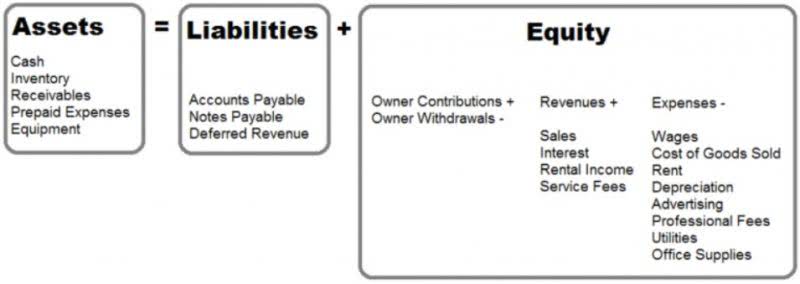
This discipline is essential for maintaining accurate financial records, compliance with accepted accounting principles and providing stakeholders with detailed and accurate financial reports. Changing tax laws are causing global organizations to plan and manage their tax affairs very differently than they have to date. FP&A’s primary responsibility is to connect senior management’s long term “strategic plan” to reality. The strategic plan is a top-down, senior management driven document that sets high-level targets (revenue, net income, core strategic initiatives, etc.) for the firm anywhere from 2-10 years in the future. FP&A’s job is to develop the operating and financial plan required to achieve management’s strategic plan. If the controller is tasked with making sure all the historical numbers are in order (i.e. financial accounting), the FP&A team is tasked with ensuring the forecasts are in order (managerial accounting).
Siloed data & manual spreadsheets
Unlike skilled services like consulting or investment banking, there is generally no fixed time frame or up-and-out approach. The majority of finance leaders consider FP&A jobs to be the most difficult to fill. FP&A talents are currently at the forefront as institutions need to examine their functions and reconsider their business model.
- At the end of each month, finance needs to “close the books,” which means they review, record, and reconcile their financial affairs.
- Effective financial planning and analysis thrives on accurate data and efficient processes.
- Additionally, businesses may collect data externally, for example, broader market, economic, and demographic data.
- In the course, an industry expert with vast experience explains several key topics like financial accounting, cost accounting, financial modeling, and financial risk management.
- Tools like Google Meet, Slack, Asana, and Cube will allow FP&A teams to share documents, collaborate on financial models, and have virtual meetings where decisions will be made.
- This includes deep insights into cash flow dynamics, what truly drives profitability, and the potential returns on investment opportunities.

Whether preparing for earnings calls, capital raises, or long-term strategic shifts, we bring the insight and financial structure needed to support confident decision-making. Through this integrated approach, we help businesses position themselves clearly in front of investors and stay aligned with their financial and strategic objectives. Accounting is responsible for recording, classifying, and reporting historical financial transactions. It ensures that financial statements are accurate, compliant with regulatory standards, and reflective of the company’s past performance. Without a way to easily share and align data, confusion and delays between teams what is fp&a can occur. The FP&A team uses clear financial language to connect the company’s overall strategy to each department’s targets.